
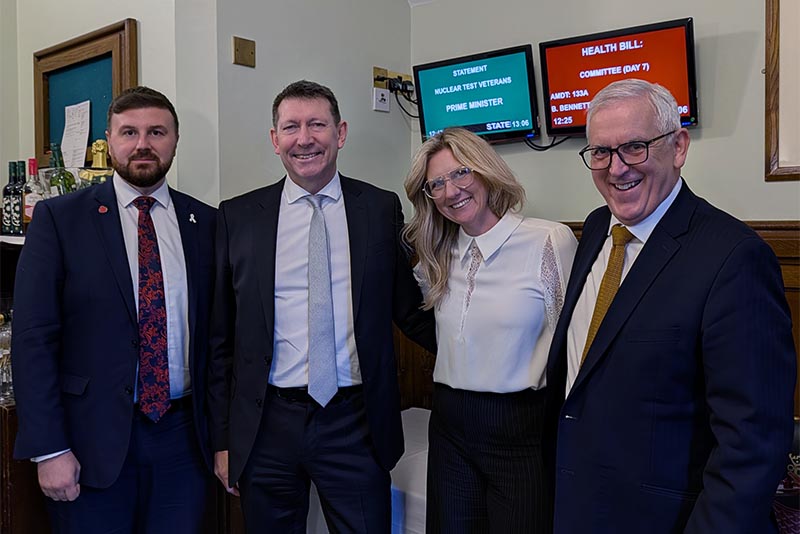
Following a parliamentary lunch focussing on the hospitality sector and the visitor economy this week, Downtown in Business (DIB), one of the country’s leading independent business organisations and a longstanding champion of English devolution, has called on the government to rethink key elements of its proposed tourist tax legislation.
Hosted by DIB in partnership with the Liverpool Business Improvement District, the Westminster event heard from industry leaders from Liverpool, Birmingahm and Manchester, alongside the chair of the Hospitality and Tourism APPG, Chris Webb MP.
In a comprehensive policy briefing paper published today, DIB warns that the government’s approach to the Overnight Visitor Levy risks imposing additional taxation and bureaucracy on an already pressured hospitality industry, without guaranteeing businesses a meaningful role in determining how the money raised is invested.
The organisation is particularly concerned that the legislation could undermine successful, private sector-led Accommodation Business Improvement Districts (ABIDs), which have been pioneered in Liverpool, Manchester and more recently Birmingham.
DIB believes these initiatives, which have secured the backing of accommodation providers and operate relatively straightforward flat-rate charges, should provide the blueprint for other destinations considering introducing visitor levies.
The business organisation has also highlighted the administrative difficulties experienced in Edinburgh following the introduction of its percentage-based visitor levy.
Among the principal concerns identified in the DIB briefing paper are:
- London’s competitive advantage: The capital’s significantly higher visitor numbers and accommodation prices could generate a substantial financial war chest, enabling London to outbid regional destinations for major cultural, sporting and business events.
- Lack of ring-fencing: Without robust statutory safeguards, revenues could be diverted away from arts, culture, events and the visitor economy to fund unrelated mayoral priorities.
- Marginalisation of business: Accommodation providers will be expected to administer the levy without a guaranteed role in determining investment priorities.
- Double taxation: Successful existing Accommodation BIDs could be undermined by the introduction of an additional statutory levy.
- Reduced Treasury support: Additional local revenue-raising powers could provide government with an excuse to reduce existing financial support for local and strategic authorities.
- Coastal communities: Traditional seaside resorts, heavily dependent on price-sensitive domestic visitors, could be disproportionately disadvantaged.
- Additional bureaucracy: Inconsistent rates, exemptions and administrative arrangements across England could create confusion, complexity and unfair competition.
Frank McKenna, Group Chair & Chief Executive of Downtown in Business, said:
“Few, if any, private sector organisations have done more than Downtown in Business to promote and support the devolution agenda over the past two decades.
“We have consistently argued for greater powers, resources and responsibilities for our directly elected mayors. However, being pro-devolution does not mean giving mayors a blank cheque.
“The government appears determined to introduce a new taxation regime when successful, business-led alternatives already exist. Liverpool, Manchester and Birmingham have demonstrated that the hospitality sector is prepared to support a modest visitor levy when businesses have a meaningful say in how the money is invested.
“Why reinvent the wheel, particularly when the experience of Edinburgh has exposed significant problems with the percentage-based model?
“There is also a huge contradiction at the heart of this policy. A government committed to rebalancing the UK economy could inadvertently hand London an enormous additional competitive advantage. How are Liverpool, Manchester, Birmingham, Newcastle or seaside towns like Blackpool supposed to compete for major events when the capital potentially has access to vastly greater resources for event subvention, cultural programming and destination marketing?
“The absence of robust ring-fencing is equally concerning. The hospitality industry should not be expected to plug holes in local government finances, fund unrelated political priorities or compensate for future cuts in Treasury support.
“And why should hoteliers be expected to collect the money if they are not guaranteed a seat at the table when decisions are made about how it is spent?
“Our message is simple: no say, no pay.
“Even within the Labour movement, there are reservations about the wisdom of introducing another tax on hospitality. Ministers would be well advised to listen to those concerns, alongside the representations being made by the industry.
“We want powerful mayors, but we also want prosperous businesses. The two ambitions should be complementary.”
Ten demands for government
Downtown in Business is calling on ministers to amend the legislation to:
- Protect existing Accommodation BIDs from duplication and double taxation.
- Permit flat-rate levies where there is demonstrable industry support.
- Guarantee meaningful private sector participation in investment decisions.
- Statutorily ring-fence revenues for culture, events and the visitor economy.
- Introduce a national statutory cap on visitor levy rates.
- Address the potential competitive imbalance between London and regional destinations.
- Guarantee that revenues will not replace existing Treasury funding.
- Introduce safeguards for coastal, rural and seasonal destinations.
- Standardise administration and minimise the cost of collection for businesses.
- Undertake a comprehensive national economic impact assessment.
DIB is seeking to bring together business organisations, hospitality operators, Accommodation BIDs, cultural institutions and visitor economy representatives from across the country to influence the legislation as it progresses through Parliament.
McKenna added:
“This is not an anti-devolution campaign, nor are we opposed in principle to business-supported visitor levies.
“It is a campaign for common sense, genuine public-private sector partnership and economic growth.
“The hospitality industry has endured increased National Insurance contributions, rising employment costs, escalating energy bills and significant business rates pressures. It needs government to be an ally in its recovery and growth, not another source of taxation and bureaucracy.
“The visitor economy should be seen as an engine of economic growth, not a cash machine for local government.”
To read DIB’s policy briefing on the Visitor Tax, please Click Here.