
This week Manchester marked the 30th anniversary of one of the darkest days in its modern history.
On 15th June 1996, the IRA detonated a massive bomb in the heart of the city centre, close to the Arndale Shopping Centre. It was the biggest bomb to explode on mainland Britain since the Second World War. Miraculously, nobody was killed.
That fact has often led people to describe the attack as a fortunate disaster. It wasn’t.
Hundreds of people were injured. Some suffered life-changing disabilities. Many more endured psychological trauma that lasted years. Businesses were devastated. Families were affected. Lives were changed forever.
Three decades on, it is right that we remember those victims and acknowledge the courage of the emergency services, city workers, businesses and ordinary Mancunians who responded with remarkable resilience.
Over the years, a narrative has emerged that the bomb was somehow the catalyst for Manchester’s extraordinary regeneration and renaissance. It is a story repeated so often that many have come to accept it as fact.
There is certainly some truth in the argument.
The destruction accelerated investment. It created opportunities to redesign parts of the city centre. It focused minds on the future rather than the past. The rebuilding programme that followed transformed significant parts of central Manchester.
Yet the suggestion that Manchester’s success was somehow dependent upon a terrorist attack is fundamentally wrong. Manchester’s resurgence was already underway long before the bomb exploded.
The city had spent years redefining itself after the decline of traditional manufacturing industries. New ideas were emerging. Ambitious leaders were beginning to think differently. There was a growing confidence that Manchester could once again become one of Europe’s great cities.
Had the bomb never happened, Manchester would still have become a success story.
Why?
Because it possessed something far more powerful than a reconstruction budget.
It possessed leadership.
Sir Howard Bernstein, arguably the most influential local government chief executive of his generation, understood that cities succeed when they have a clear vision and the courage to pursue it relentlessly. Alongside Sir Richard Leese, who would become one of the most significant council leaders Britain has produced, he helped create a long-term strategy that transcended political cycles and short-term thinking.
Their partnership gave Manchester something many cities still struggle to achieve – consistency.
At the same time, cultural pioneers were reshaping perceptions of the city.
Tony Wilson was far more than a television presenter and music entrepreneur. He was one of Manchester’s greatest evangelists. Through Factory Records, the Hacienda and his endless promotion of the city, he helped create a global brand long before city branding became fashionable.
Peter Saville did something equally important. Through design, creativity and an unwavering belief in Manchester’s identity, he helped define how the city presented itself to the world.
Meanwhile, business leaders were investing not because of a bomb, but because they believed in Manchester’s future.
Figures such as Michael Oglesby and his company Bruntwood demonstrated a commitment to the city that went far beyond commercial return. They saw potential where others saw decline. Their investments helped create the commercial foundations upon which future growth would be built.
The bomb may have accelerated the timetable. It did not create the ambition. The ambition was already there.
Indeed, one could argue that Manchester’s response to the attack tells us far more about the city’s character than the attack itself. Many places can rebuild damaged buildings. Far fewer can emerge stronger, more confident and more ambitious.
Manchester did precisely that because it possessed a generation of civic, cultural and business leaders who shared a common purpose.
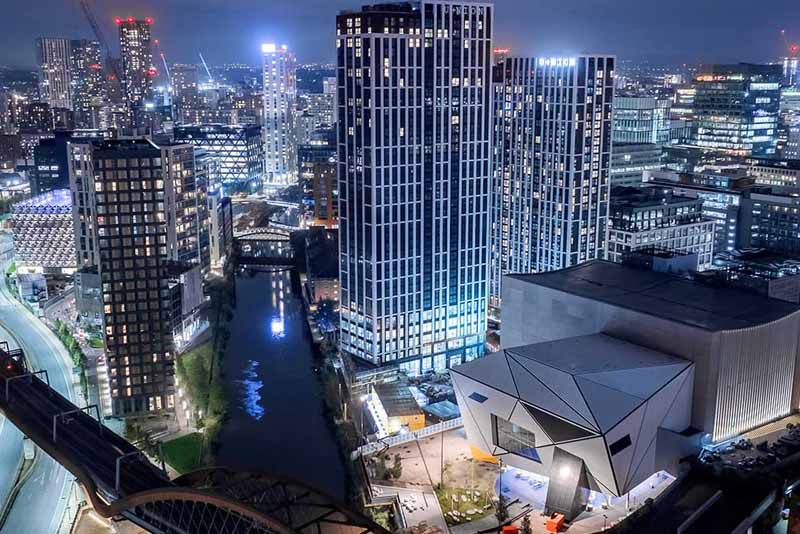
Thirty years later, the city stands as one of Europe’s most successful urban regeneration stories. Its economy is thriving. Its universities attract global talent. Its cultural influence remains enormous. Its skyline continues to evolve.
Those achievements should not be attributed to terrorists.
They belong to the people who imagined a better future and then delivered it.
As Manchester reflects on the anniversary of the bombing, it should remember the victims, honour those affected, and celebrate the resilience that followed.
But let’s not perpetuate the myth that Manchester needed a bomb to become great. The city’s renaissance was not born from destruction. It was built by vision, leadership, creativity and belief. And that was always going to happen.