I love America. Everything is bigger and brasher and bolder. Especially the politics.
The goings on of 12th November summed it up in all its glory and goriness.
While the UK political classes mooted then denied considering whether Wes Streeting was or wasn’t a better choice to be PM than Keir Starmer, or what the point of the BBC was, America said, ‘hold my beer’.
Waking up, America knew that the House of Representatives – the ‘lower house’ in US politics – was going to vote on the bill approved by their more senior senate partners to end the longest deadlock and federal shutdown in U.S. history.
The focus was on whether the congressmen and women would vote to approve the budget bill as presented or whether they would extend the health subsidies for 21 million families likely to lose their coverage if the Affordable Care Act sunsets.
A big day was promised in the halls of power.
But then, just when the first coffee was being poured, the New York Times arrived on the door mat.
On its pages were transcripts of reporter Michael Wolff’s emails back and forth with Jeffery Epstein suggesting that President Trump was more aware of the goings on at Epstein’s island and various social functions than he had been letting on.
The emails delighted Democrats who have long called for the entire Epstein Files to be released but, without the necessary numbers in Congress, have been unable to force that through.
Overstimulated already, the breakfast news media didn’t know which way to look.
Most focused on the predictable matter of the congressional vote. Probably in part to buy time for their lawyers to review the NYT article and advise their own journalists on how to articulate the breaking news without falling foul of the incredibly litigious occupant of the White House.
Besides, the congressional vote was already packed with political intrigue.
While a number of Democrat senators – mainly those who were retiring at the next election or had chosen not to stand again – had voted with the Republicans to end the shutdown without any meaningful move on extending healthcare support, it was still unclear if Democrats in the House of Representatives would feel the same.
As the morning progressed, the media channels also became more comfortable with sharing the NYT story, reporting the facts as published but avoiding any colourful commentary or editorialization.
And then, around lunchtime, the leader of the Democrats in the House of Representative, New Yorker Hakeem Jefferies, broke cover. Careful not to admit defeat ahead of the vote, the gentle dance of repositioning the issue began.
While many Democrats had spent the morning gnashing their teeth at the treachery of their colleagues in the Senate, Jeffries revealed a subtle but powerful clause which had been included in the approved Senate Bill – the Affordable Care Act, widely known as ObamaCare – would return to Congress for a vote in January.
This is a bit of a masterstroke by the Democrats.
While the timing of the January vote on extending healthcare does little to help those of us petrified at the enormous cost increase – for some a 300% hike for next year’s health coverage is predicted – politically, it put the issue back in a singular focus.
Up until this clause was revealed, the erosion of healthcare benefits had been wrapped up in a larger wrangle between Democrats and Republicans about a plethora of issues – benefits, federal wages, deficits, defense and infrastructure spending – but now, with the rest of the budget about to be approved, the Democrats were able to bring the biggest political issue – health care affordability – out into its own spotlight, and in a crucial midterm election year too.
The genius of this was that now, with a vote agreed on extending ObamaCare secured, Republican senators and congressmen and women would be forced into a simple ‘yes or no’ vote on whether they supported the retention of affordable healthcare. Roll calls would show who did and who didn’t and electors would be fully informed about where their representatives stand on this crucial issue as they considered their midterm votes.
As the lunch plates were cleared away, more news began spilling out of Washington.
A fraction under two months ago, Arizona voters had elected Democrat Adilita Grijalva as their new representative. But, because of the Federal Government shutdown, Republican Speaker Johnson refused to swear her in. He did, however, promise that when the Government re-opened, the first act of business would be to admit her to the hallowed halls.
With the vote in the House now seeming to favour the Republicans, it became clear the shutdown would be lifted and Congresswoman Grijalva was duly sworn in.
Cameras were dispatched to cover the story and the new Arizona representative announced her first action upon being sworn in would be to add her name – crucially the 218th required – to a bipartisan petition calling for a free vote to release the Epstein Files.
This meant that like the Affordable Healthcare Act, a vote in the new year on releasing the Epstein Files would take place and, while it is unlikely to be approved if it did finally arrive at the President’s desk for signing, would shape the political discourse and focus the media for the weeks and months ahead.
Politically, the damage to the Republicans, and the President, may already have been done.
Even Trump’s loyal MAGA voters are troubled by why the President – once a huge advocate of total transparency over the Epstein case – would now want to block the release of the files.
Then, midafternoon, with the vote in the House rapidly approaching, American politicians did what they do best – pork-barreling.
This is the process by which specific clauses are added to a bill at the last moment to increase the likelihood that certain elected officials feel more inclined to support it. Normally that is exemptions for rural states, adding funding for disadvantaged neighbourhoods, or increasing infrastructure spending on projects of strategic influence.
But his time, a last-minute provision was added to the bill that allows senators whose communications had been tapped during former Special Counsel Jack Smith’s probe into the Jan 6th insurrection to sue the federal government for $500,000 each.
Consequently, eight Republican senators – Lindsey Graham (SC), Marsha Blackburn (TN), Bill Hagerty (TN), Josh Hawley (MO), Dan Sullivan (AK), Tommy Tuberville (AL), Ron Johnson (WI), and Cynthia Lummis (WI) – will each find themselves 500 big ones to the good.
Nice work if you can get it.
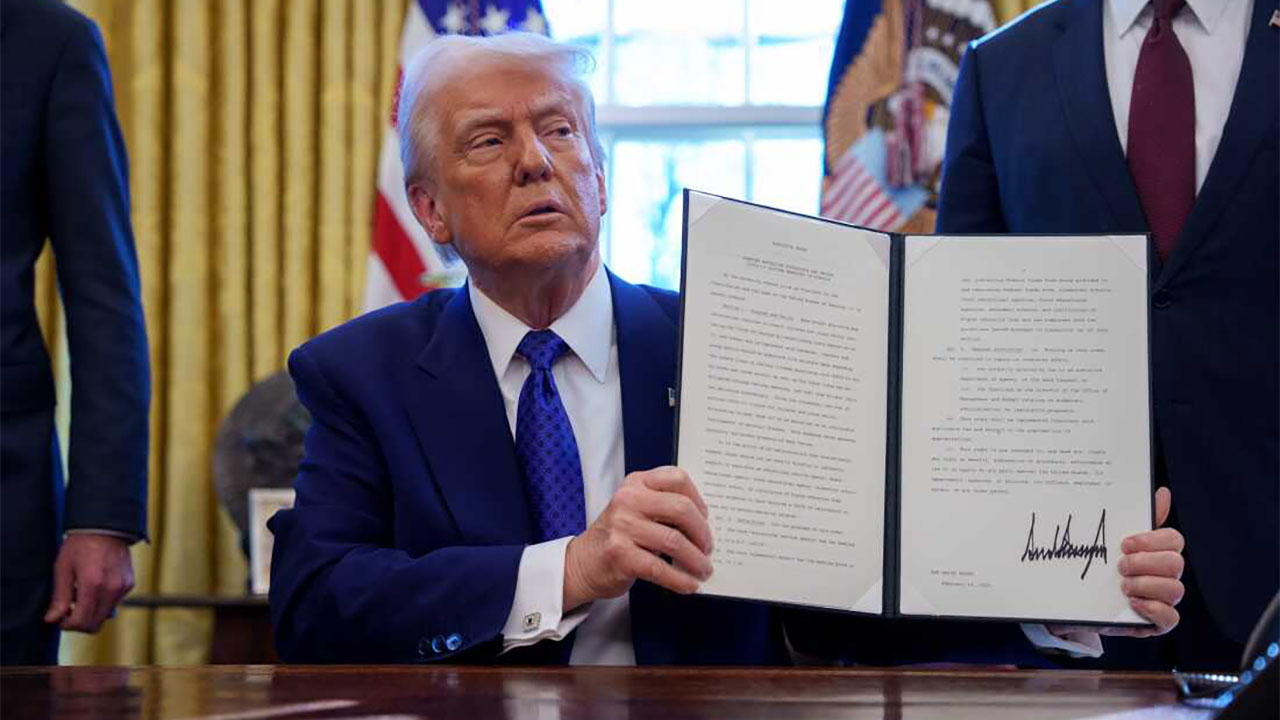
So, finally around tea-time, the day’s activities finally started to draw to a close. The House voted to send the bill to the President as drafted and at 10.00pm after dining with Wall Street executives, he signed it and the government reopened after a record 43 days.
Food and welfare benefits are restored, airports and flights return to near normal, national parks and monuments reopen and millions of federal workers will pick up a pay cheque for the first time in 7 weeks.
Just another ordinary day in American politics.