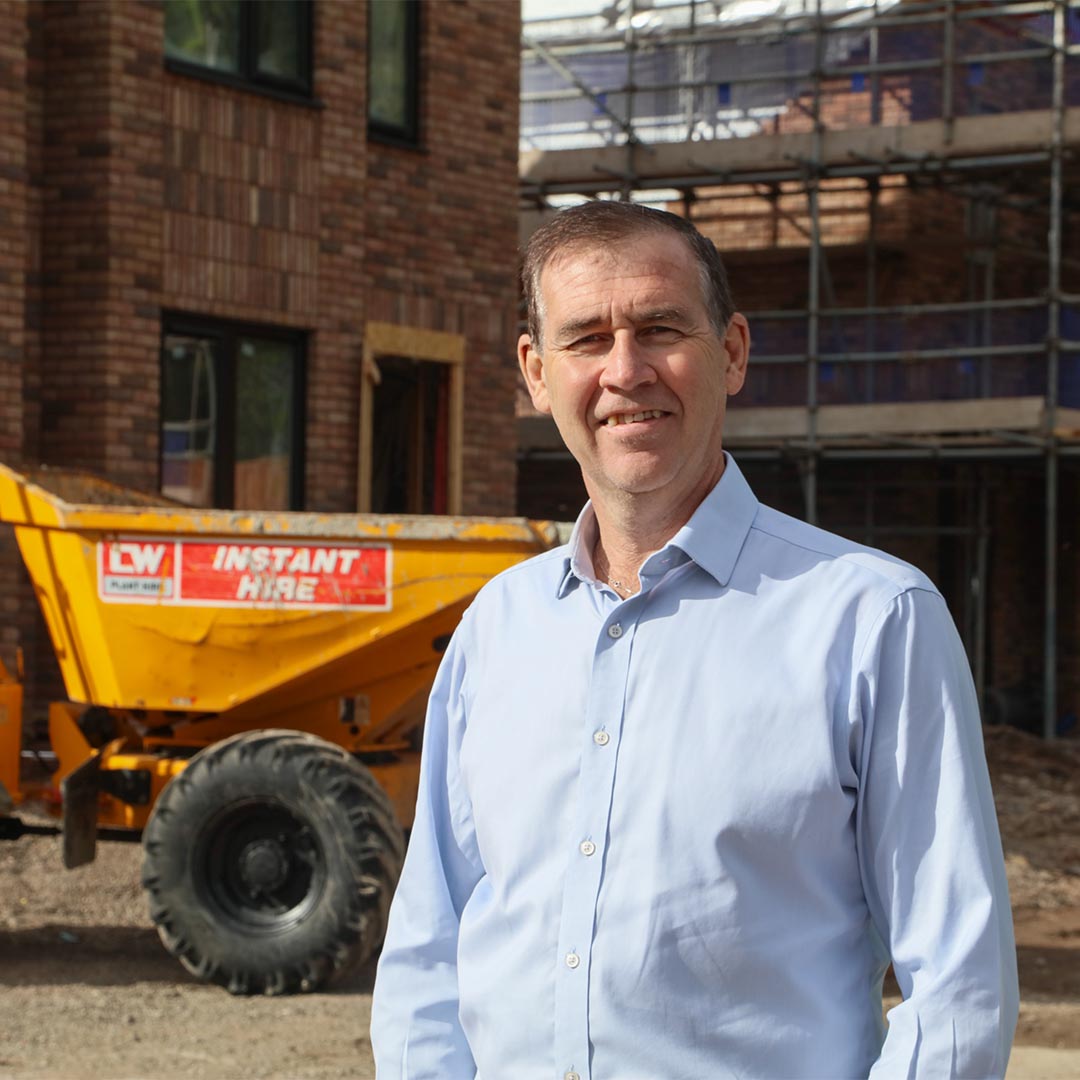
Sean Keyes CEO at leading Civil and Structural Engineers, Sutcliffe, reacts to PM, Andy Burnham’s speech a the Labour Party conference 2026.
For a generation, this country has built fewer homes than it needs, and the consequences are felt in every town and city across the North West. Young people are priced out of ownership, families wait years on housing lists and too many private rented homes fall short of a decent standard. So it was encouraging to hear the Prime Minister put housing first in yesterday’s speech in Liverpool, with a council house building programme on a scale we haven’t seen since the post-war years, and a commitment to bring unused public land and empty homes back into use. Housing isn’t a market that comes and goes with the political cycle. It’s an essential, and treating it that way is the right starting point.
What struck me most, though, was how relatable the speech was for those of us who share that kind of upbringing. My own family lived in an inner city terrace house and my mum and dad made the bold move to buy a house with a garden in Knowsley . That decision laid the foundation for me to go to university and, in time, to own my own home, and it came from nothing more than their hard graft and determination. Hearing the Prime Minister describe the family home that set his own life in motion, and pay tribute to his mum and dad, resonated with me. I’m grateful to my parents for laying strong foundations that I’ve been able to build on for my own family. That’s exactly why getting housing right matters so much. A secure home doesn’t just shelter a family, it gives the next generation somewhere to start from.
Whilst the ambition is right, however, it will only be as strong as the workforce behind it. Every one of those homes needs engineers, surveyors, planners and skilled trades to design and deliver it, and after more than 35 years in this industry, I’ve watched many councils lose the in-house technical teams they once relied on to bring schemes forward. A decent home and a strong technical education are the foundations of a successful society, which is why I welcome the commitment to put technical routes on an equal footing with university. Young people need to know that a career in engineering or surveying is a first choice, not a fallback. At Sutcliffe, many of our senior engineers began their careers with us as apprentices or graduates, and we’ve pledged to train 40 new engineers and surveyors over the next decade because we believe businesses have a responsibility to build that pipeline themselves.
To my mind, the direction of travel is the right one. Liverpool and Manchester have both shown what’s possible when places have more say over their own growth, and giving local leaders a stronger hand on housing, energy and infrastructure should help more of the region follow. I have no quarrel with the principle of stronger public control over the basics. The question is whether planning, grid connections and skills can keep pace with the ambition, because a scheme that can’t get connected to the grid or staffed on site doesn’t get built. Success will be measured by the number of homes built and the number of apprentices trained, not by the scale of the announcements. Without a clear plan for the people who deliver them, it risks becoming another target the country falls short of.