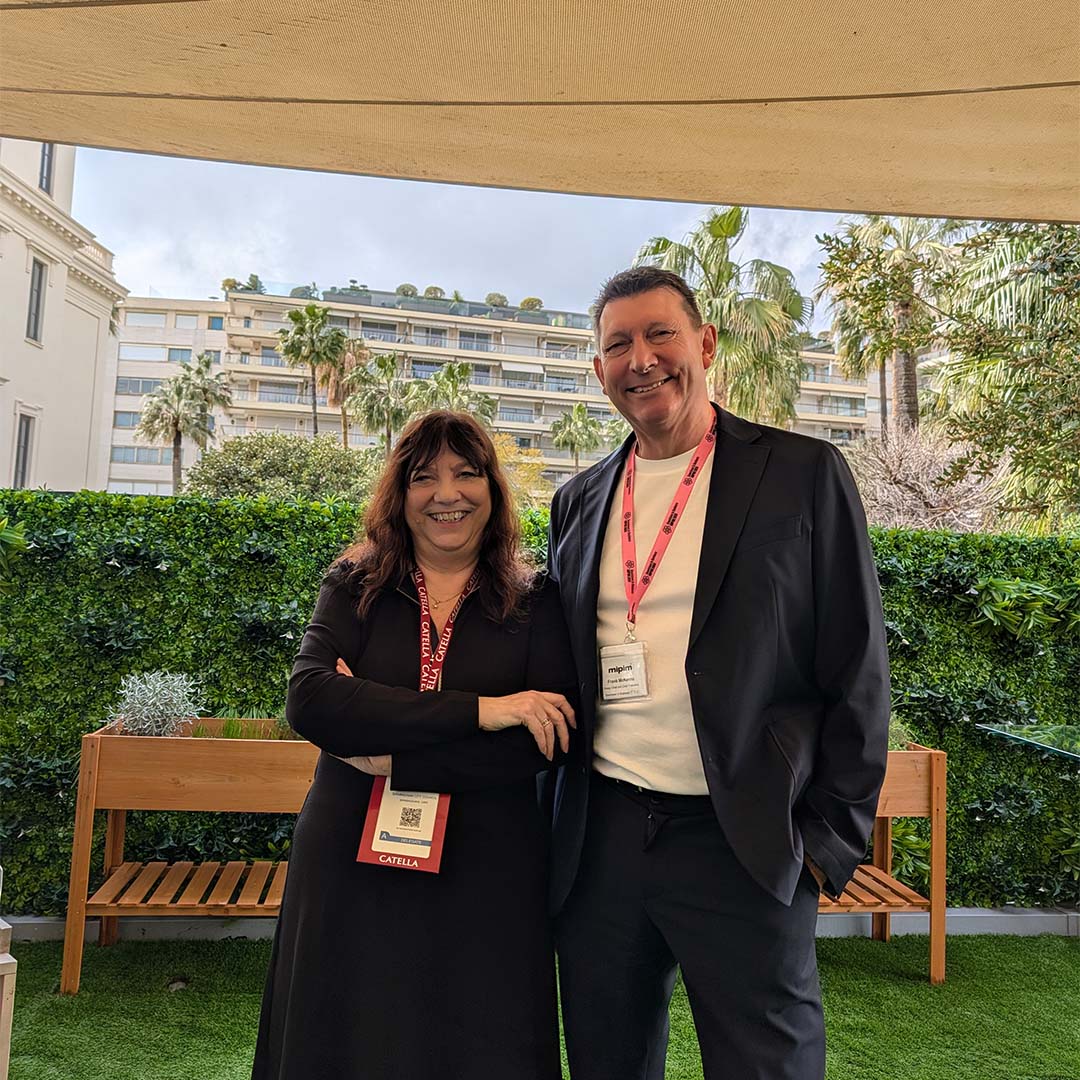
Frank McKenna, Group Chair and Chief Executive of Downtown in Business, reflects on the recent political changes at Birmingahm City Council, and considers the potential consequences…
There is no point pretending otherwise. The local election results in Birmingham earlier this month were a political earthquake.
After years of controversy, some would say crisis and chaos, the electorate finally ran out of patience with Labour’s administration at Birmingham City Council. The bin strike debacle became symbolic of a wider sense of dysfunction. Bankruptcy shredded confidence in the council’s competence. Nationally, the unpopularity of the Labour government added further ballast to the anti-incumbent mood.
The result? A kaleidoscope council chamber made up of Labour, Conservatives, Liberal Democrats, Greens, Reform, and a collection of independents, with nobody commanding an overall majority and no obvious route to stable political leadership.
In normal circumstances, that would set alarm bells ringing across the business community.
Because Birmingham is not just another local authority trying to balance the books and fix potholes. This is the UK’s largest local authority. The economic capital of the Midlands. A city with enormous assets, global potential, and once-in-a-generation opportunities currently within touching distance.
And that is precisely why Birmingham cannot afford to allow political turmoil to derail its future.
There is an irony here. At exactly the moment the council chamber appears at its most fragmented and unstable, Birmingham itself is arguably standing on the edge of one of the most transformational periods in its modern history.
The danger is not that the city lacks opportunity.
The danger is that politics gets in the way of it.
Some of the newly elected councillors represent parties, or, in some cases, simply personal campaigns, that appear to have little in common beyond opposition to the old Labour administration. Protest votes are perfectly understandable. But protest politics is very different from governing a major international city.
Running Birmingham requires discipline, seriousness, strategic thinking, and, above all, collective responsibility.
That is why many business leaders are understandably nervous when they see a chamber populated by councillors with wildly different agendas, conflicting ideologies, and in some cases little obvious experience of delivering large-scale economic policy.
However, and this is the crucial point, Birmingham is fortunate that a number of stabilising forces remain firmly in place.
First, and perhaps most importantly, the city now benefits from the leadership of Richard Parker and the West Midlands Combined Authority.
The establishment of the mayoral development zone, the largest in the country, changes the game entirely.
Major regeneration schemes, investment strategies, transport connectivity, housing growth, and economic development can now continue at pace under the mayoral structure, largely unencumbered by the day-to-day political hotchpotch currently unfolding at the Council House.
That matters enormously.
Because investors crave certainty. Developers want clarity. International businesses need confidence that decisions will actually get made.
Richard Parker understands that. Whatever one’s politics, the mayor knows Birmingham and the wider West Midlands cannot afford drift.
Supported by Neil Rami and his very able team at the West Midlands Growth Company-who orchestrated Birmingham’s impressive profile at last week’s property shindig UKREiiF- the indigenous business community has reason to remain optimistic about mayoral delivery
Secondly, government commissioners remain in place at the city council.
Now, there are some politicians who dislike commissioners on principle. They see them as an affront to local democracy. I understand the argument.
But the reality is this: right now, they are providing a degree of stability, oversight, and competence that the city desperately needs.
Following effective bankruptcy, Birmingham could not simply be handed back overnight to inexperienced or fragmented political control and told to “get on with it.”
The commissioners are acting as guardrails during a difficult transition period – and business leaders will quietly welcome that.
Thirdly, Birmingham retains one of the strongest senior local government officers in the country in Joanne Roney.
Joanne Roney is highly respected across local government, Whitehall, and the private sector alike. She understands regeneration. She understands growth. And perhaps most importantly at this particular moment, she understands delivery.
Cities survive political turbulence when strong institutions and capable leadership remain intact behind the scenes.
Birmingham still has that.
And then there is the wider economic picture, which remains incredibly exciting.
Take HS2.
Despite years of political wrangling nationally and continued wrangling, the arrival of high-speed rail will still fundamentally reshape Birmingham’s economy, connectivity, and investment potential. Around Curzon Street and Digbeth, enormous regeneration opportunities are already materialising.
The city is becoming more attractive to major employers, investors, and young professionals because of that infrastructure transformation.
Then there is sport.
The proposed new stadium development linked to Birmingham City F.C. has the potential to become a landmark regeneration catalyst, not simply a football ground, but a major commercial and residential development opportunity capable of reshaping large parts of East Birmingham. And lets not forget the resurgence of Ason Villa as a Premier League force, and recent winners of a European trophy.
Add to that the continued strength of sectors such as advanced manufacturing, professional services, life sciences, higher education, and digital technology, and it becomes obvious why Birmingham still matters enormously to the UK economy.
The fundamentals remain strong.
Indeed, many cities across Europe would love to possess Birmingham’s combination of geographic position, youthful and diverse population, infrastructure pipeline, universities, business base, and development opportunities.
Which is why this moment requires maturity from Birmingham’s politicians.
The electorate has delivered a brutal message. Voters wanted change. They wanted accountability. They wanted the perceived incompetence and complacency of recent years swept away.
Fair enough. That is democracy in action.
But now comes the hard part. This cannot become a council consumed by ideological trench warfare, performative politics, or endless grandstanding for social media clips.
Businesses will not invest in chaos. Developers will not commit billions into uncertainty. And government will not endlessly pour support into a city that appears incapable of governing itself responsibly.
Birmingham has spent years rebuilding its reputation after bankruptcy damaged confidence nationally and internationally. It cannot now afford another period of paralysis.
The city needs pragmatism. It needs grown-up politics. And above all, it needs every serious stakeholder, public and private sector alike, focused relentlessly on growth, jobs, investment, regeneration, and delivery.
Because Birmingham is simply too important to fail.
The prize remains enormous. But only if the city keeps its eye on the future rather than disappearing into the political circus.
It is, at least in part, the role of the private sector and independent business networks like Downtown in Business, to hold politicians to account, and get behind those public sector representatives and officials who want to maintain the momentum Birmingham has built over the past decade.