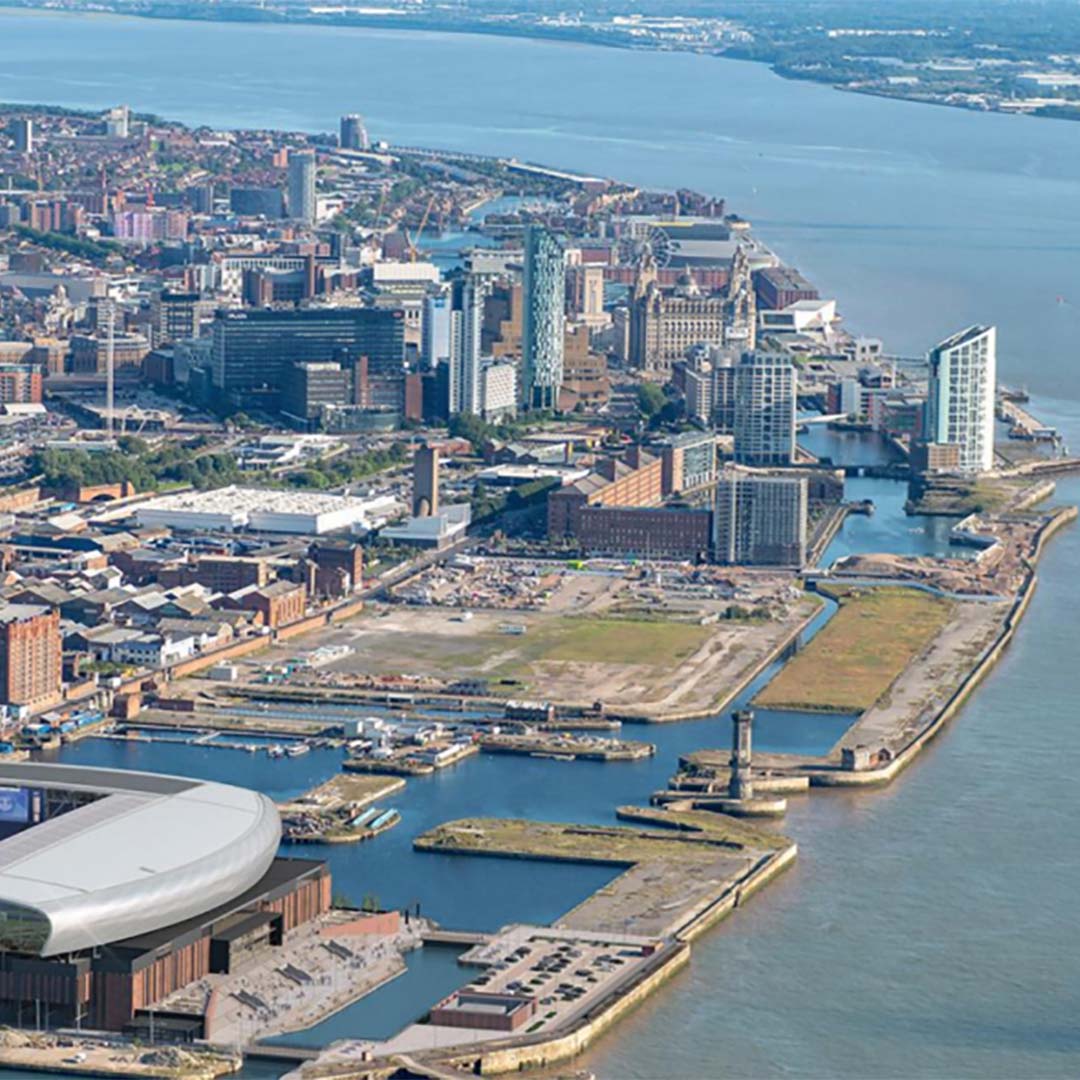
Downtown in Business (DIB) has welcomed proposals to establish a Mayoral Development Corporation (MDC) to lead the regeneration of the area currently described as ‘Liverpool North Docks’, but is urging civic leaders to think even more boldly about how the project is branded, connected and presented to the world.
In its formal submission to the Liverpool City Region Combined Authority’s consultation, DIB gives its full backing to the creation of the MDC, describing the initiative as a once-in-a-generation opportunity to unlock billions of pounds of investment, create thousands of new homes and jobs, and reinforce Liverpool’s position as one of Europe’s leading investment destinations.
However, the business organisation argues that ‘Liverpool North Docks’ should be regarded as a working title rather than the long-term identity of the project.
Downtown believes a development of this scale deserves a distinctive destination brand that reflects its international ambition and captures the imagination of investors, businesses, residents and visitors alike.
Frank McKenna, Group Chair and Chief Executive of Downtown in Business, said:
“This is far more than the regeneration of a stretch of former dockland. It is the creation of an entirely new waterfront district that has the potential to transform Liverpool’s economy for generations.
“The great regeneration projects of recent decades have all been defined by compelling identities as much as outstanding masterplans. Canary Wharf, MediaCity, Liverpool ONE and Battersea Power Station are all globally recognised brands in their own right.
“Liverpool has a remarkable opportunity to create one of Europe’s great waterfront destinations. Projects of this scale deserve more than administrative titles. At the right time, the Combined Authority should work with businesses, investors, cultural organisations and local communities to develop a destination brand that reflects the ambition of this extraordinary project and resonates on the international stage.”
Downtown in Business also believes the proposed boundary of the Development Corporation should be reviewed to include Sandhills Station, recognising its strategic importance to the long-term success of the regeneration programme.
McKenna said:
“Every great urban district has a front door. For Liverpool’s new waterfront district, that front door is Sandhills Station.
“It will be the first impression for residents, commuters, visitors, football supporters and investors arriving by rail. The quality, connectivity and integration of that gateway will help define perceptions of the entire development.
“Successful regeneration should be shaped by connectivity, not simply administrative boundaries. Sandhills should therefore form an integral part of the Development Corporation’s vision from the outset.”
Alongside its support for the MDC, Downtown in Business has proposed a series of recommendations designed to maximise the project’s long-term success, including:
- stronger private-sector representation within the Corporation’s governance, combining experienced business leaders with fresh voices and new perspectives from across the city region’s evolving economy;
- faster planning and decision-making processes to provide greater certainty for investors;
- a renewed focus on attracting international investment and promoting Liverpool’s new waterfront district on the global stage;
- transparent reporting against key economic and regeneration targets; and
- the establishment of a Skills Compact, bringing together employers, developers, contractors, the City of Liverpool College, universities and training providers to ensure local people have the skills needed to benefit from the thousands of high-quality jobs created by the development.
The submission recommends that the Skills Compact is led in close partnership with the City of Liverpool College, recognising its nationally respected record of working with employers to deliver industry-led skills and training aligned to the needs of a modern economy.
Concluding, Frank McKenna said:
“Downtown in Business strongly supports the Mayor’s ambition and the creation of a Mayoral Development Corporation. But this project should aspire to become much more than another regeneration scheme.
“It should become the UK’s benchmark for modern, devolved, investment-led regeneration and a blueprint for how cities can create thriving waterfront communities through visionary leadership, public-private partnership and commercial confidence. “Liverpool has transformed itself before through bold thinking. This is an opportunity to do so again – not simply by creating a new neighbourhood, but by creating a destination that will be recognised and admired around the world.”