
If you’ve spent any time watching Washington lately, you’ll know that economic sanctions – once the niche preserve of Treasury Department lawyers – are now one of the most potent, headline‑grabbing tools in America’s foreign‑policy kit.
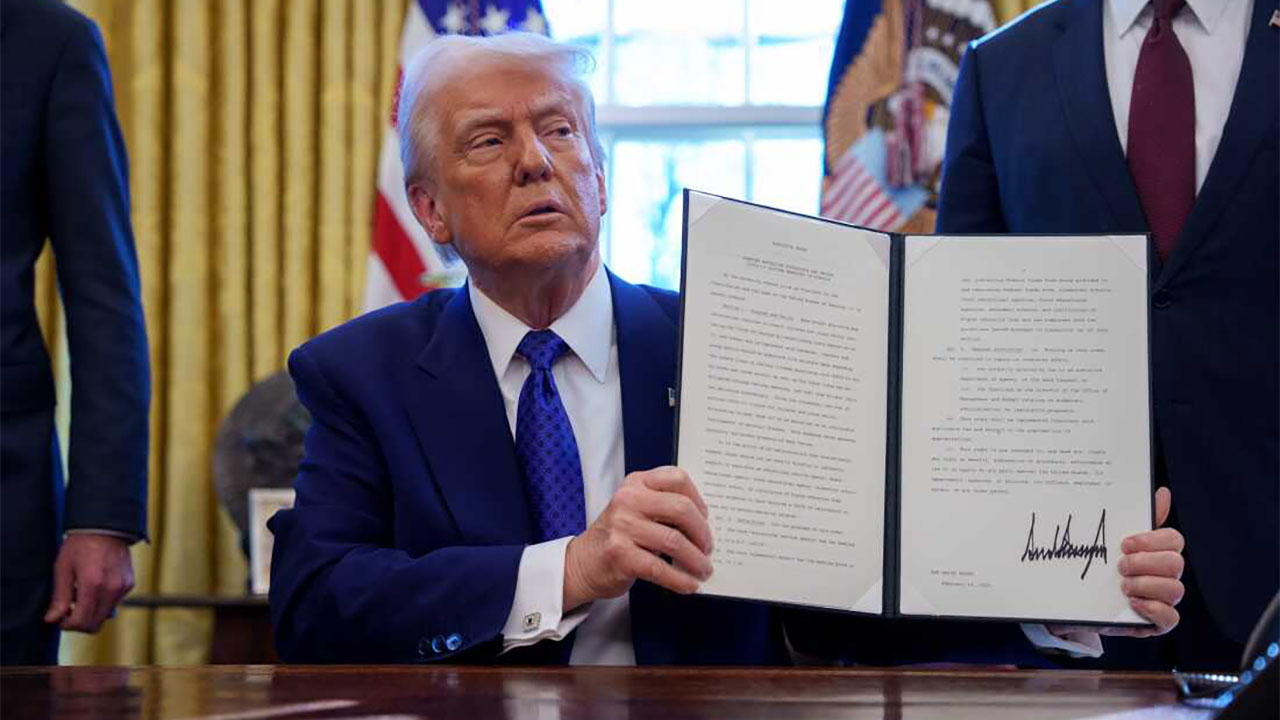
While many voices are critical of President Trump’s unorthodox approach to international diplomacy – tariffs, bombings, property deals, regime change – there is little doubt that the comfortable, predictable world order of old has been shaken rather than stirred.
The US President has, through a range of economic and military flexes, brought the conversation onto his terms and the wider western world is struggling to comply and respond.
With the administration doubling down on an “America First” economic strategy, the knock‑on effects for the UK and Europe are becoming impossible to ignore.
Sanctions and US economic leverage previously were used to bring rogue states into line but are now impacting friends not just foes.
Washington’s willingness to impose costs on allies if they continue certain transactions with perceived enemies could reshape trade flows and investment decisions across the continent.
We are looking at a sanctions landscape that is shifting under our feet – one that could tug at transatlantic supply chains, financial markets, and energy security. And as ever, when America sneezes, Europe risks catching a cold.
Earlier this week, the UK’s banking sector acknowledged the threat that economic sanctions on payment systems may raise – 95% of all UK consumer bank transactions are processed by Visa or Mastercard and with cash disappearing from the high street any US sanction to restrict their use would bring the nation’s economy to a grinding halt.
While UK PM Kier Starmer – much maligned at home – has managed to keep Washington and London broadly aligned, his counterparts in Brussels are charting a slightly different path, illustrating a growing divergence between U.S., UK, and EU sanctions policies and responses.
For many transatlantic businesses, the safest route when plotting compliance against fast emerging regulations ends up being to follow the strictest code – usually the American one. This means higher hurdles, more internal controls, and more back‑office costs.
And the era of a broad, one‑size‑fits‑all sanctions and tariffs ecosystem has all but passed. Instead, we are entering a phase of targeted, strategic sanctions aimed at technology chokepoints, energy supply chains, finance networks, and geopolitical leverage points. This new world makes life harder for multinational firms but equally more unpredictable for policymakers.
For the UK and Europe, the greatest risk isn’t any single U.S. sanction—it’s the growing regulatory divergence across the Atlantic. Businesses may soon find themselves navigating three overlapping sanctions universes: a strict and aggressive U.S. system, a newly assertive UK framework, and a cautious but sometimes conflicting EU approach.
For British and European firms trading with global partners, clearing in U.S. dollars, or touching any part of an American supply chain, the new sanctions reality means one thing above all: expensive complexity.
The need for legal and financial services advice is expanding. Choosing to enter or leave a market because of a high friction compliance universe is more prevalent, and the cost of complying with multiple regulatory frameworks is – as ever – being passed on to customers and consumers who are already at breaking point.
What does all this mean for UK companies? Boards and compliance teams must now monitor U.S. legislative developments, UK enforcement reforms, and EU legal obligations simultaneously—no easy feat when each jurisdiction is evolving on its own timeline.
In short, the geopolitical sands are shifting and for transatlantic businesses, the message is clear: keep your compliance up to speed.