For all the noise, in some quarters panic, and the inevitable “death of the two-party system” headlines that will follow yesterday’s local elections in England and the devolved elections in Scotland and Wales, a little political perspective is required.
Yes, Labour and the Conservatives are expected to take a hammering. Yes, Reform UK will make gains in England. Yes, the Greens will continue to advance in metropolitan areas. And yes, nationalism remains a powerful force in both Scotland and Wales.
But none of this necessarily means British politics is undergoing a permanent realignment.
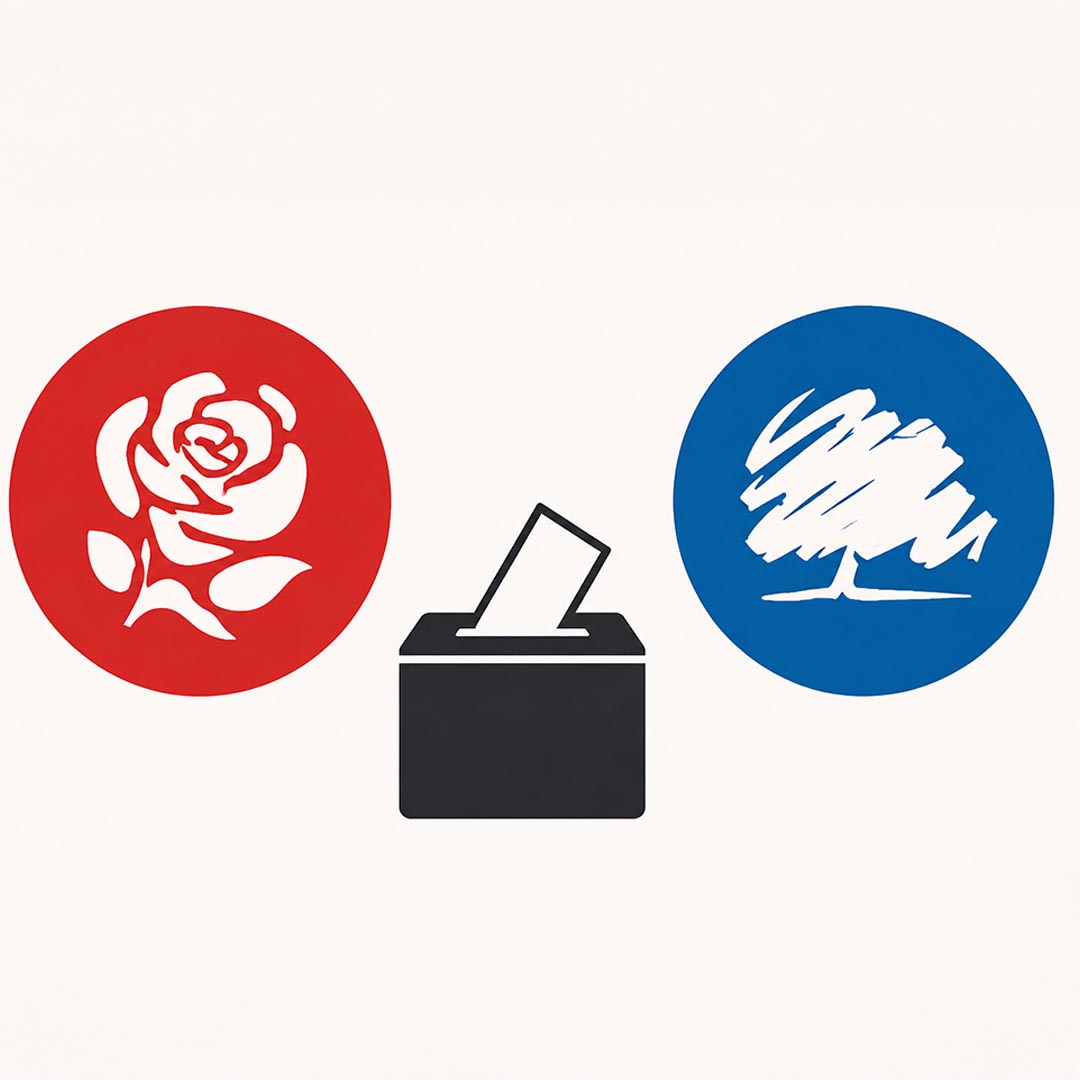
In fact, there is every chance that by the time of the next General Election in 2029, we will once again be watching a straight fight between Labour and the Conservatives for power at Westminster.
British voters have a long history of using local, European, devolved, and mid-term elections to send messages to the government of the day. These contests often become giant protest votes. People feel freer to back smaller parties because the immediate consequences are limited. It is politics without risk.
General Elections are different.
When the question becomes “Who runs the country?” rather than “Who empties the bins?” or “How do I register my frustration?”, voting behaviour changes dramatically.
The first-past-the-post electoral system remains the great protector of the two-party model. Smaller parties can achieve impressive percentages nationally and still end up with relatively few MPs. We have seen it before with UKIP, the Liberal Democrats, and the Greens.
Nigel Farage’s Reform Party may perform strongly in council elections, and it will undoubtedly shape political debate over immigration, public services, and national identity. But converting anger into parliamentary seats is another challenge entirely.
Equally, the Greens continue to build a committed activist base and growing urban support. Yet Britain is not proportional representation territory. Under the current system, concentrated support matters more than broad but shallow popularity.
Meanwhile, the SNP and Plaid Cymru face their own pressures. Nationalism thrives when governing parties in Westminster appear arrogant or disconnected. But both nationalist movements are also now establishment parties themselves, the SNP in particular carrying the burden of government records open to scrutiny and criticism.
More importantly, politics moves quickly.
Between now and 2029 there will almost certainly be economic shifts, leadership changes, international crises, rows over taxation, public spending battles, and probably several political “game-changing moments” that the media will confidently declare permanent before moving on to the next one a fortnight later.
Voters are restless because Britain is restless. Living standards have been squeezed, public services are under pressure, trust in institutions has weakened, and politics increasingly feels fragmented and tribal.
But frustration with the political system does not automatically produce a lasting alternative to it.
Labour’s challenge is to prove that government can still work competently and effectively. The Conservatives’ task is to rediscover a serious political identity after years of chaos, division, and self-inflicted damage.
If both parties manage that, even imperfectly, the gravitational pull of British politics will likely drag voters back toward the traditional Westminster contest.
The two-party system may be bruised, battered, and unpopular. But reports of its death remain, in classic political tradition, somewhat exaggerated.