For years, Andy Burnham has been regarded by some as Labour’s nearly man.
Twice defeated in leadership contests, he left Westminster in 2017 to become Mayor of Greater Manchester. Many assumed he had abandoned any serious ambition of one day becoming Prime Minister.
The opposite looks like proving to be true.
When Burnham does ultimately make the journey from Manchester to Number 10 in a few weeks’ time, he will arrive better prepared than most recent Prime Ministers. More importantly, the decisions he is already taking offer valuable clues about how a Burnham premiership might differ from that of Keir Starmer.
Learning Government in Manchester
The most important preparation for a Burnham premiership has not taken place in Westminster. It has happened in Greater Manchester.
For nearly a decade, Burnham has enjoyed something few modern politicians ever get: genuine executive experience. He has not simply commented on government; he has had to govern.
He has overseen the introduction of bus franchising, championed major housing developments, supported skills and training initiatives, pushed reforms to tackle homelessness and become the leading advocate for English devolution.
His handling of the Covid pandemic, particularly his public confrontation with Boris Johnson’s government over financial support for Greater Manchester, elevated him from regional leader to national figure.
What Burnham learnt during those years is likely to shape everything he does as Prime Minister.
He has seen first-hand that successful government is rarely about grand speeches. It is about bringing together public agencies, local authorities, investors, employers and communities to solve practical problems.
That experience may make him fundamentally different from many Westminster politicians whose careers have been spent almost entirely within Parliament and political parties.
Manchester became his apprenticeship for national leadership.
The Manchester Model
Burnham’s years in Greater Manchester have also shaped his view of economic growth.
Unlike some politicians on both left and right, he does not see government and business as opponents.
Manchester’s remarkable renaissance over the last three decades was not delivered by government alone. Nor was it achieved by the private sector acting independently.
It happened because civic leaders, universities, developers, investors, entrepreneurs and local authorities worked together towards a common goal. Burnham has embraced that model.
Throughout his time as Mayor, he has developed strong relationships with business leaders, backed regeneration schemes, promoted inward investment and worked closely with employers across the city region.
His instinct has generally been to engage rather than confront.
That does not mean he would be unwilling to challenge poor corporate behaviour. But he understands that governments do not create wealth. They create the conditions in which wealth can be generated.
For Britain’s business community, that may be one of the most reassuring aspects of a potential Burnham premiership. If there is one lesson he should take from Manchester, it is that economic success depends on strong collaboration between the public and private sectors.
Building a government
The personnel decisions already being made provide another glimpse into Burnham’s thinking.
His appointment of James Purnell as Chief of Staff is perhaps the clearest signal yet.
Purnell, a former Cabinet minister under both Tony Blair and Gordon Brown, is one of the most experienced political operators in the country. He understands Whitehall, understands Westminster and understands how government machinery works.
Successful governments require experienced people who know how to turn political priorities into practical outcomes.
Purnell should be able to ensure that ministers, civil servants and special advisers remain focused on delivering the Prime Minister’s priorities.
The Importance of Kevin Lee
Alongside Purnell sits another key figure: Kevin Lee.
Lee lacks Purnell’s Westminster profile but offers something equally valuable: loyalty.
He has worked alongside Burnham for years and is widely regarded as one of the people the Mayor trusts most.
The best advisers are often those who understand that their role is to advance the leader’s agenda, not build their own power base.
Lee’s influence suggests Burnham wants a team built around trust and personal loyalty.
And that brings us to one of the most interesting contrasts with the Starmer era.
A Different Model to Starmer
Keir Starmer’s government was heavily shaped by the influence of Morgan McSweeney.
McSweeney deserves enormous credit for Labour’s return to power. He was instrumental in transforming the party, selecting candidates and rebuilding Labour’s electoral coalition.
However, McSweeney’s primary loyalty was always to the Labour project itself.
He viewed Starmer as the leader capable of defeating the Corbynite left and restoring Labour’s credibility with voters. Consequently, his influence stretched far beyond that of a conventional adviser.
Many ministers believed he helped shape not only government policy but the wider direction of the party. Burnham appears to be constructing something different.
Purnell brings experience.
Lee brings loyalty.
Together they suggest a Downing Street where the Prime Minister is firmly in charge and advisers understand their role as deliverers rather than architects of the project.
The Cabinet Burnham Might Build
Cabinet appointments will provide further clues.
Louise Haigh appears an obvious candidate for a return to government after playing a key role in Burnham’s successful Makerfield campaign.
Lucy Powell, Burnham’s long-standing ally and current Deputy Leader, will almost certainly get a senior role.
Likewise, Angela Rayner. With the controversies that led to her departure from government now cleared up, she remains one of Labour’s most effective communicators and strongest political performers. Few would be surprised to see her return.
Yet Burnham faces a delicate balancing act.
A senior team featuring Burnham, Powell, Haigh and Rayner would strengthen accusations that Labour is becoming a northern political machine.
The self-styled “King of the North” label has undoubtedly helped Burnham politically. It underlines his success as Mayor and his championing of devolution.
But Prime Ministers cannot be seen as representing one region.
Burnham’s challenge will be demonstrating that the lessons he learnt in Manchester can benefit Britain as a whole.
That is why figures such as Miatta Fahnbulleh could become increasingly important. A talented London MP with growing influence, she would help demonstrate the breadth of Burnham’s coalition.
The same may be true of Wes Streeting, another London MP who is one of Labour’s most capable communicators and one of the party’s biggest political assets. He was also the first ‘big beast’ to have the courage to resign from the Starmer cabinet a few weeks ago.
John Healey and Alistair Cairns could also expect a return after leaving the defence team.
The Chancellor Question
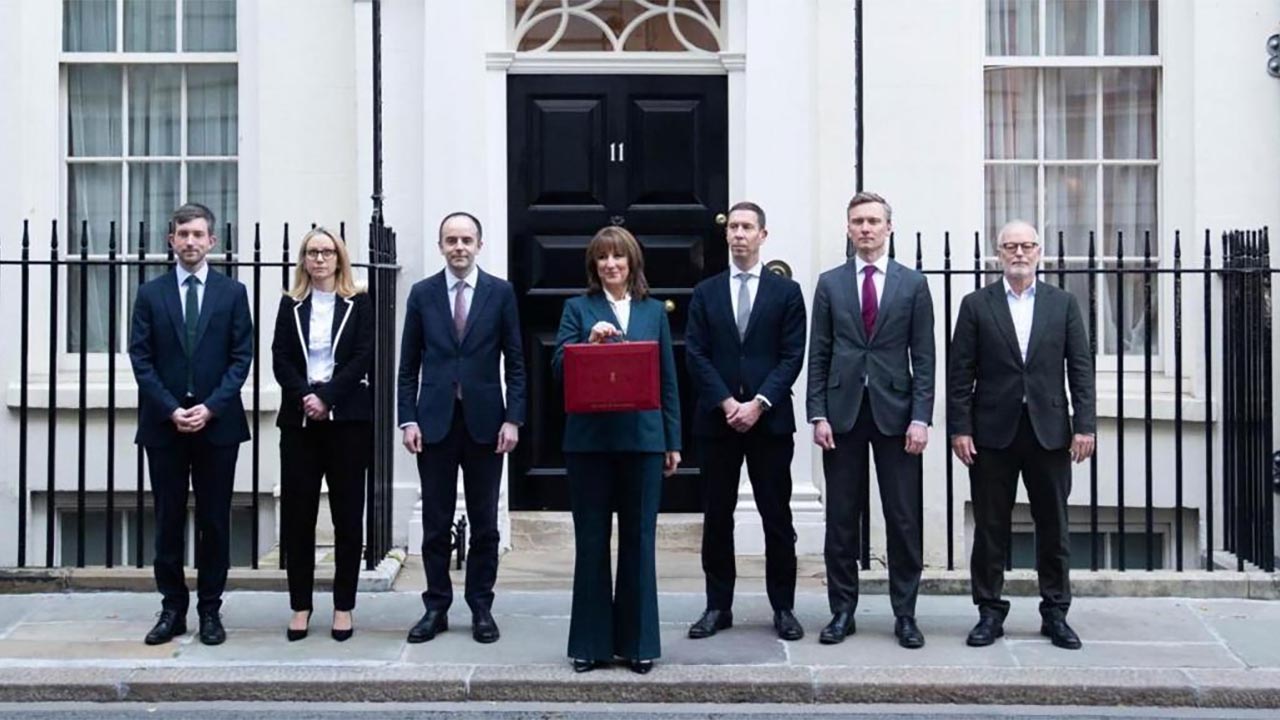
The biggest appointment of all remains Chancellor and few expect Rachel Reeves to survive a change of leadership.
The question is who replaces her.
Streeting’s name has been mentioned, but appointing a politician who was himself a potential leadership contender may place a rival too close to the centre of power.
Ed Miliband is personally close to Burnham but would alarm significant sections of the business community and, indeed, parts of the trade union movement.
Yvette Cooper could emerge as a dark horse candidate. Experienced, competent and respected across the party, she would bring both Treasury experience and political authority.
Pat McFadden and John Healey may also enter the conversation.
Meanwhile Darren Jones remains too talented to ignore. Despite his close association with Starmer, Burnham may conclude that ability matters more than factional loyalty.
David Lammy, by contrast, may find himself out in the cold.
Whoever gets the chancellorship will send an important signal about the direction of the government and its economic priorities.
Policy Matters More Than Personalities
Ultimately, however, governments are judged on outcomes, not appointments.
Here, Burnham is likely to place devolution at the heart of his agenda.
No politician in Britain has done more to champion the cause of regional empowerment.
Expect proposals for stronger mayors, greater local control over transport, skills and economic development, and a broader debate about constitutional reform.
Indeed, Burnham may see a first term in office as laying the foundations for more radical constitutional changes during a second term secured with his own electoral mandate.
He is also likely to pursue welfare reform, albeit framed through the language of opportunity, work and fairness rather than simply cost control.
Yet for all the policy differences, the biggest contrast with Starmer may be something that is essential in twenty-first century politics.
Communication.
Burnham’s greatest political strength has always been his ability to connect.
Whether campaigning for the Hillsborough families, standing up for Greater Manchester during Covid, or speaking to voters in working class communities, he possesses a quality increasingly rare in modern politics: he sounds like a real person.
That does not guarantee success. Governments fail for many reasons.
But after years in which Labour has often appeared managerial, cautious and technocratic, Burnham offers something different.
He communicates with warmth. He is upbeat. He offers optimism and hope.
Burnham understands the emotional as well as the practical dimensions of politics.
And as Labour searches for a leader capable of reconnecting with voters, that may prove to be his most valuable qualification of all.
The truth is that Andy Burnham’s preparation for Number 10 did not begin with a parliamentary by-election or a leadership contest.
It began the day he left Westminster for Manchester.
The question now is whether the lessons he learnt there can work for the whole country.