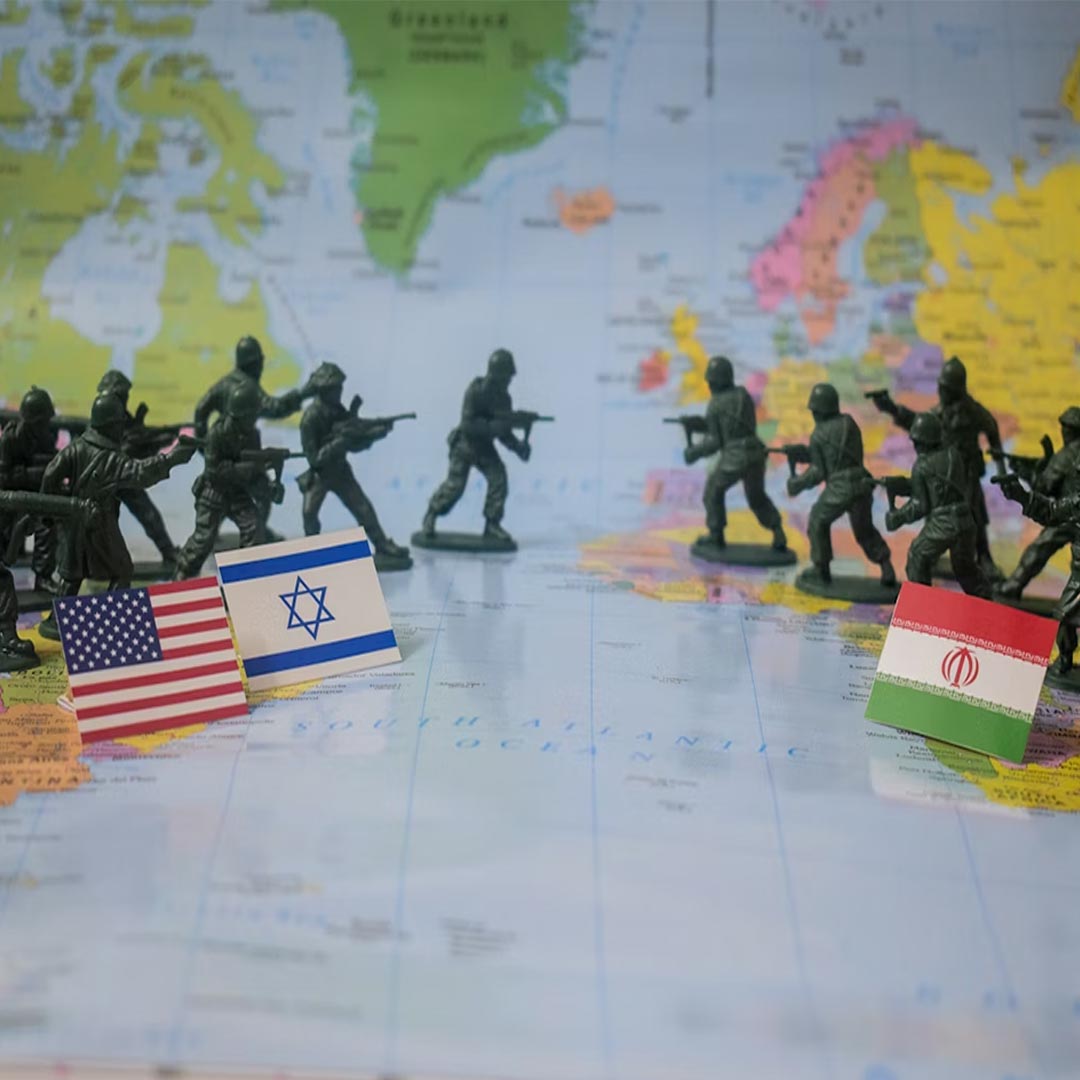
We would all like to see Iran as a democratic member of the world community. The historic heritage of Persia and the current potential of its people cry out for this to happen. However, since the 1950’s this great country has suffered repressive governments, first under the Shah and his Savak police and since 1979 a vicious theocracy that has spread global terror.
Now coming to Iran’s “rescue” is the most erratic, vainglorious President in America’s history and an Israeli leader bent mostly on revenge on Iran which wants to wipe his country from the face of the earth. Rational peacemakers they ain’t.
Meanwhile we are all caught up in this. By we I mean Iran’s neighbours, the British expat community and the global economy facing yet another bout of uncertainty. Not to mention China and Russia, who as I write, have remained fairly quiet. The horrible thought crosses my mind that, with America so committed in the Gulf, this would be an ideal time for China to attack Taiwan.
There are four possible outcomes from this war. The most preferred and least likely is that a democratic Iran emerges. The massive hurdles in the path of this happening are that the regime still has substantial support. Also, the brave opponents of the theocracy have already paid a heavy price this year for coming out on the streets and, crucially, the opposition is divided on who should rule. The son of the former Shah, Reza Pahlavi, has some support but probably not enough to fly in from America and be greeted into power by cheering crowds. Furthermore, only half the Iranian population is Persian. Groups like the Balochis might want to split away. The Iranian Army is crucial. If it turned on the Guards, it might provide the power to dislodge the very entrenched regime and allow space for democratic Iranians to try and get their act together.
The next alternative seems quite possible given Trump’s short attention span and desire for a deal. This would be the “Venezuela option” whereby the regime stays in place but agrees to America’s terms on nuclear and ballistic weapons.
We cannot discount the possibility that the current regime exhausts its opponents with a long war and Trump loses interest.
Finally, the country could descend into a bloody civil war bringing instability which Arab neighbours’ dread.
GORTON GOES GREEN.
It is always dangerous to predict the political future from one by election. It could be that Gorton marks the permanent fragmentation of our two-party system. In 2029 we could see the result of trying to conduct multi-party politics with a first past the post voting system produce a chaotic result. The insurgent Greens and Reform could get 180 each, Tories and Labour 100 each, 25 Lib Dems and 60 others. Sort that one out.
Or, with immigration falling Reform may have already peaked. The Greens policy on drugs, NATO and open borders could show that their leader, Zack Polanski, was a political comet rather than a permanent constellation. The economy may improve and the cost of living come down. Sir Keir Starmer could survive the local election meltdown with nobody prepared to challenge the PM during a global crisis, and plod on until 2028. Then Andy Burnham will be free of his mayoral role and possibly lead Labour to largest party victory.
I’m not saying this will happen. Hannah Spencer, the new MP for Gorton, was a good refreshing candidate who benefitted from the special circumstances that often attend by elections. Young women are flocking to the Greens, and nothing (apart from the Tory/Conservative Party) is permanent in politics, but Gorton doesn’t absolutely certainly mean a fundamental change is on the way.